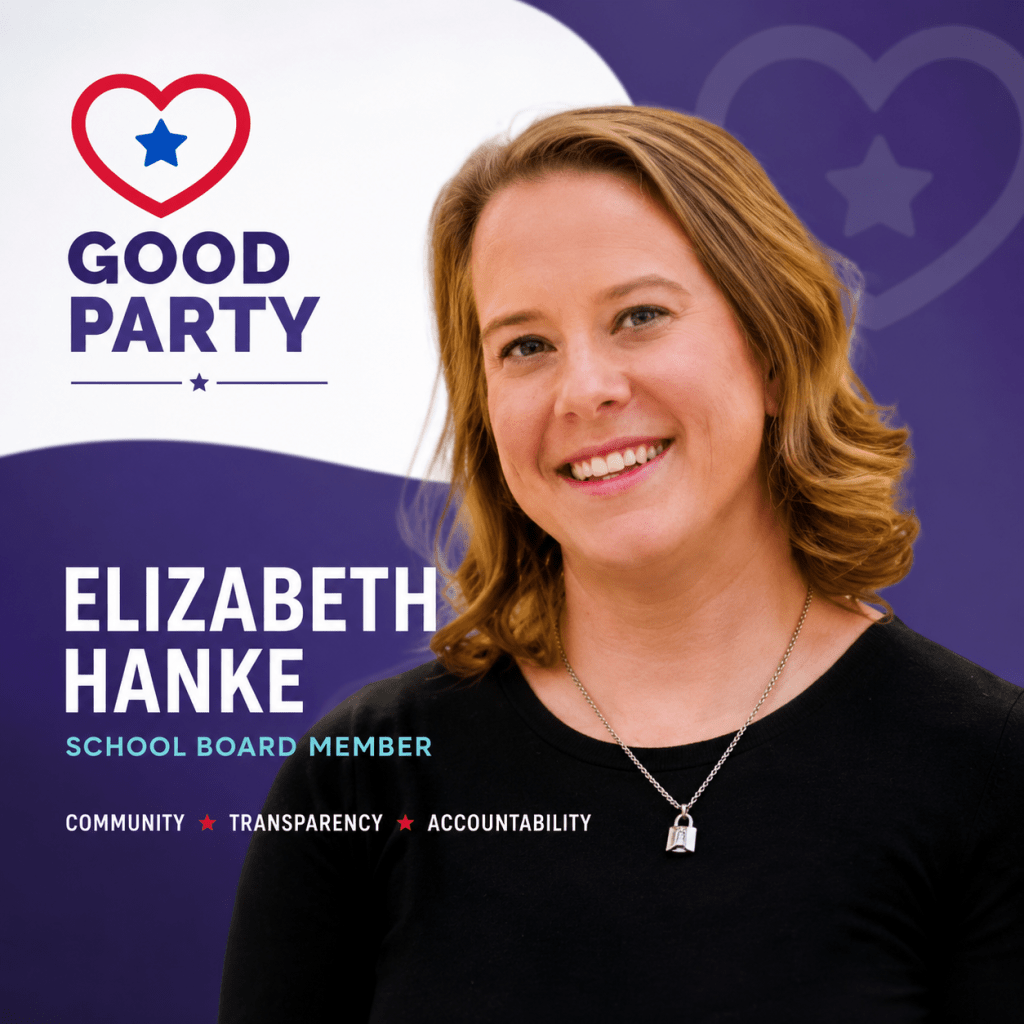
Running for elected office in 2024, changed my life for the better.
Like many first-time candidates, I started the journey because I cared deeply about my community and wanted to make a difference. What I didn’t expect was how much the experience would change me personally.
The friendships I formed, the people I met, and the support I received during some difficult moments became some of the most meaningful parts of the entire experience. While campaigns often focus on elections and outcomes, the relationships built along the way can be just as important.
One of the most unexpected and positive experiences was working with my campaign manager through Good Party. He was a young man living in Florida; more than 1,500 miles away, from a completely different generation and background than mine. On paper, we probably had very little in common.
Yet we quickly discovered that we shared the same belief: real change often starts at the local level.
Both of us were discouraged by the division and negativity that often dominate national politics. Instead of focusing on what was happening in Washington, we believed in serving our communities, solving local problems, and helping ordinary citizens become involved in public service.
Over the course of the campaign, we spent countless hours talking strategy, working through challenges, celebrating successes, and navigating difficult moments. There was something remarkable about building a friendship with someone half my age who lived in the southernmost state in the country, yet shared many of the same values about civic engagement and community service.
That experience reminded me that meaningful relationships can form across generations, across geography, and across different life experiences when people are united by a common purpose.
Looking back, winning a seat on the school board was certainly meaningful. But the friendships, lessons, and personal growth that came from the journey may be the things I value most.
📌 Getting on the Ballot
The first step was learning the filing process and making sure I met all of the requirements to run. Fortunately, school board races in Minnesota do not require the large signature collection efforts that some other offices require.
I went to the district office, picked up the paperwork, and started learning the process. Understanding deadlines, filing requirements, and campaign finance reporting was not nearly as difficult as I initially imagined. There are plenty of resources available to help first-time candidates navigate the process.
My advice is simple: start early, ask questions, and connect with people who have run before.
🤝 Building Support
The biggest source of support came from relationships I had built over many years in the community.
As a parent of three daughters who attended Mankato schools, a YMCA mentor, a Junior Achievement volunteer, an exchange student host parent, a local business owner, and a former Planning and Zoning Commissioner, I already knew many families throughout the district. Those relationships became the foundation of my campaign.
Support came from parents, teachers, community members, business owners, and residents who cared deeply about education and wanted to see greater engagement and transparency.
The relationships you build before you run are often the foundation of your campaign.
📝 What Worked Best
The most effective campaign tool wasn’t advertising—it was conversations.
I spent a tremendous amount of time listening to people one-on-one. Coffee meetings, phone calls, community events, neighborhood conversations, and social media discussions provided valuable insight into what people cared about most. I knocked on a lot of doors and had countless face-to-face conversations.
Some of the issues that came up repeatedly included:
- Student achievement
- Teacher support and retention
- District finances
- Parent engagement
- Long-term enrollment trends
People appreciated having someone who was willing to listen before offering solutions.
The single most effective thing I did was talk with people and listen.
💡 What Helped Most
Data helped.
When discussing issues, I tried to rely on publicly available information rather than assumptions. Reviewing district reports, enrollment data, budgets, audits, state reports, and strategic plans helped me better understand both the challenges and opportunities facing the district.
I found that voters appreciated candidates who could explain complex issues in a way that was understandable and grounded in facts.
Facts and data helped build credibility and meaningful conversations with voters.
😅 What Was Hardest
The hardest part was balancing everything.
Running a campaign while managing a business, raising a family, and maintaining everyday responsibilities was challenging. There were many late nights spent reading reports, responding to questions, attending events, and preparing campaign materials.
What surprised me most, however, was the intensity that can sometimes come with local politics. There were moments when people followed me with cameras, negative stories were written about me, and even members of my family were subjected to unwanted attention. For someone who had never run for office before, it could feel overwhelming at times.
This is where Good Party made a real difference. Their team stood by me when things got difficult, provided encouragement, and reminded me to stay focused on why I was running in the first place. Having that support system mattered more than I can express.
Good Party didn’t just provide campaign resources—they provided support when things became difficult and reminded me to stay focused on my mission.
One lesson I learned is that social media can create a distorted picture of reality. When you’re in the middle of a campaign, it can feel like every post, comment, article, or criticism is consuming the community’s attention and that the walls are closing in around you.
In reality, most people are busy living their lives. Many voters never see the online drama, and those who do are often turned off by personal attacks.
In fact, I found that many people respected candidates who stayed focused on issues rather than engaging in attacks.
The experience reinforced an important lesson: focus on what you can do for your community, not on tearing down someone else.
For all of the difficult moments, the experience was absolutely worth it because of the incredible people I met along the way. I met parents, teachers, students, community leaders, and residents who genuinely care about improving their community.
The people I met along the way made the entire experience worthwhile.
🔄 What I’d Do Differently
If I could do it again, I would start organizing my outreach efforts earlier.
I would build my contact lists sooner, create more structured community events, and spend even more time meeting residents face-to-face before filing.
I also would have started sharing educational content earlier. Many voters are interested in school finance, enrollment trends, and student outcomes, but those topics can be difficult to understand. Providing information consistently throughout the campaign would have helped people engage sooner.
I would spend less time worrying about criticism and more time talking directly with voters. Looking back, the conversations mattered far more than the commentary.
Final Thoughts
One lesson stands out above all others:
You do not need to be a career politician to run for office.
Local government needs parents, community volunteers, business owners, educators, and everyday citizens who are willing to step forward and serve.
Running for school board was one of the most challenging things I’ve done, but it was also one of the most rewarding. Whether you win or lose, the process teaches you about your community, builds relationships, and gives you a deeper understanding of how local government works.
If you’re considering running for office, start having conversations, learn the issues, and don’t wait until you feel completely ready. Most candidates never feel completely ready; but taking that first step is how every campaign begins.
Thank You goodparty.org


Leave a Reply