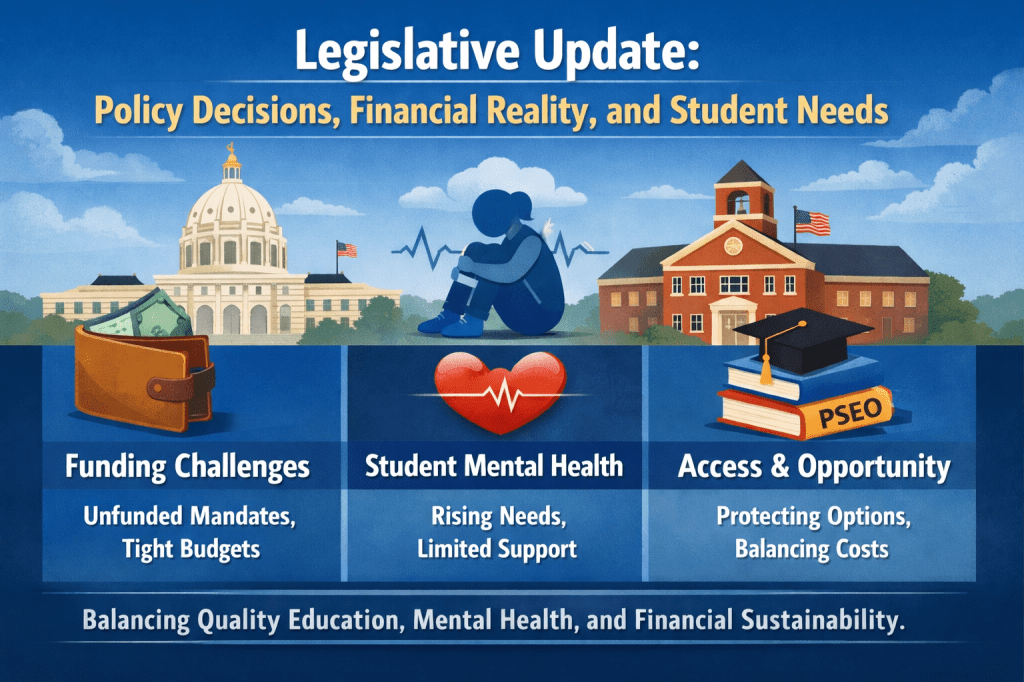
At the MSBA Delegate Assembly, school boards from across Minnesota were clear on one thing: while this is a policy year, not a bonding year, policy decisions still carry very real financial consequences for districts and students.
Boards consistently raised concerns about well-intended policies that add new responsibilities without stable, long-term funding. Unfunded and underfunded mandates strain district budgets, limit planning, and force difficult local tradeoffs.
Student mental health was a recurring theme—especially in special education and student services. Districts are seeing rising needs, growing caseloads, and expectations that continue to outpace our ability to staff and sustain services responsibly.
Those same financial pressures came up in discussions around PSEO. While districts acknowledged the financial impact of full-time PSEO participation, there was strong agreement that financial challenges should not be solved by reducing student opportunity. Many students rely on PSEO out of necessity, not convenience, and oversight concerns should be addressed through better coordination—not fewer options.
These same themes surfaced in our local legislative meetings. While some participants emphasized mental health and others focused on financial policy, there was broad agreement that both are essential. In a CACR work session, principals described how para staffing shortages reduce the ability to deliver mental-health support, as staff are redirected to cover gaps, and how some students’ attendance is tied to whole-family challenges beyond the scope of schools to resolve on their own.
Across every level of educational policy making, the same concerns continue to surface: quality and access, mental health, and financial sustainability.
 Elizabeth Hanke for Mankato School Board
Leave a comment