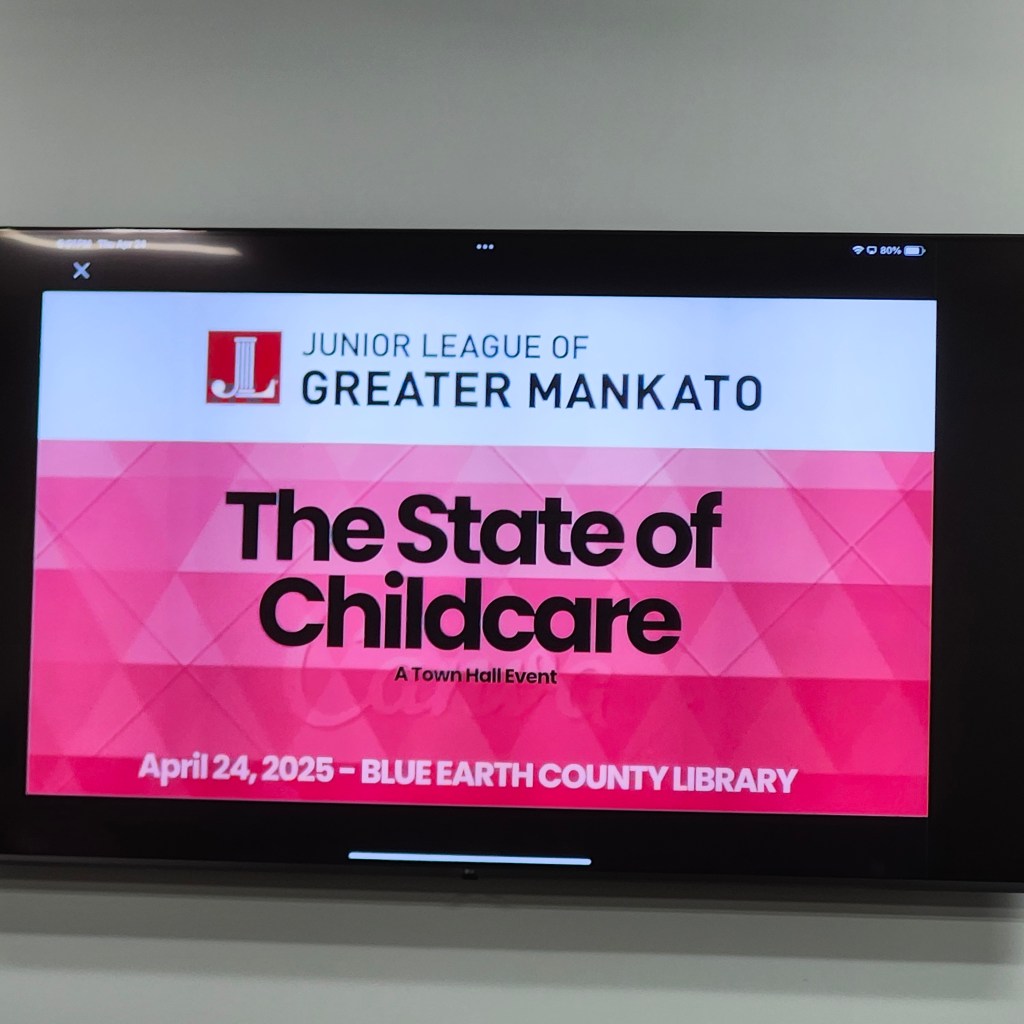
On Thursday, April 24, 2025, I attended a Junior League of Greater Mankato event focused on the state of childcare in our region. As a school board member with older children and a member of the community education committee, I prioritize engaging with parents of younger children to better understand their needs and represent our community effectively. This event provided valuable insights into the challenges facing childcare providers and families.
The Junior League, dedicated to advocating for women, allows each chapter to select a focus area. The Greater Mankato chapter has chosen childcare, reflecting its commitment to addressing critical community needs. The event offered onsite childcare, though attendees were primarily childcare providers and advocates. Participants engaged in roundtable discussions, with key points shared with the group.
Key Issues Raised
- Unfunded Mandates and Rising Costs: Providers expressed concern about unfunded mandates, which increase operational costs without additional financial support. They fear these mandates could strain childcare services, with many community members unaware of the looming challenges. According to a 2023 report from the Center for American Progress, childcare costs in Minnesota have risen by 20% since 2019, outpacing inflation, and unfunded mandates exacerbate this burden. The Reformer wrote, “Child care in Minnesota is among the most expensive in the nation, according to data released this month by the Economic Policy Institute.”
- Workforce Challenges: Both parents and providers acknowledged the dedication of childcare workers but highlighted burnout and low wages as major issues. The median hourly wage for childcare workers in Minnesota is $14.63 (U.S. Bureau of Labor Statistics, 2024), significantly lower than other education-related fields. One provider noted that the shift to online training post-COVID reduced opportunities for in-person team-building and professional development, which previously fostered camaraderie and motivation.
- Decline in Early Education Programs: Attendees raised concerns about colleges and universities discontinuing early childhood education programs, further limiting the pipeline of qualified childcare workers. In Minnesota, enrollment in early childhood education degree programs dropped by 15% from 2015 to 2020 (Minnesota Office of Higher Education).
- Bureaucratic Barriers to Grants: Providers echoed a concern I share about public education: grants, while valuable, often require extensive paperwork. Small childcare centers, like many schools, lack the administrative capacity to navigate these processes. Providers noted that much of the required data is already submitted to the state, and a streamlined application process would allow resources to be directed toward children rather than bureaucracy. A 2022 study by the National Association for the Education of Young Children found that 60% of childcare providers avoided applying for grants due to administrative complexity.
- Preference for Local Collaboration: Providers preferred working with county officials over state agencies, citing better understanding of local needs and stronger community relationships. This aligns with findings from a 2024 Minnesota Department of Human Services report, which noted that county-level partnerships improved childcare program outcomes in rural areas.
Call for Community Engagement
The Junior League and providers emphasized the need for greater community awareness and collaboration to address these challenges. They urged parents, community members, and policymakers to advocate for sustainable solutions. Personally, I believe many in our community care deeply about childcare but are overwhelmed by their own responsibilities, making it difficult to prioritize advocacy for critical services like childcare.
Additional Context
- Childcare Shortages in Minnesota: A 2024 report from the Minnesota Department of Human Services indicates that 40% of Minnesota counties are childcare deserts, with fewer than one licensed childcare slot per three children under five. This scarcity disproportionately affects rural areas like Greater Mankato.
- Economic Impact: The childcare crisis has broader implications, with a 2023 study by the Federal Reserve Bank of Minneapolis estimating that childcare shortages cost Minnesota’s economy $1.2 billion annually due to reduced parental workforce participation.
Moving Forward
This event underscored the urgency of addressing childcare challenges through policy reform, community advocacy, and streamlined resource allocation. I encourage community members to attend similar events, connect with the Junior League, or contact local officials to advocate for childcare solutions.
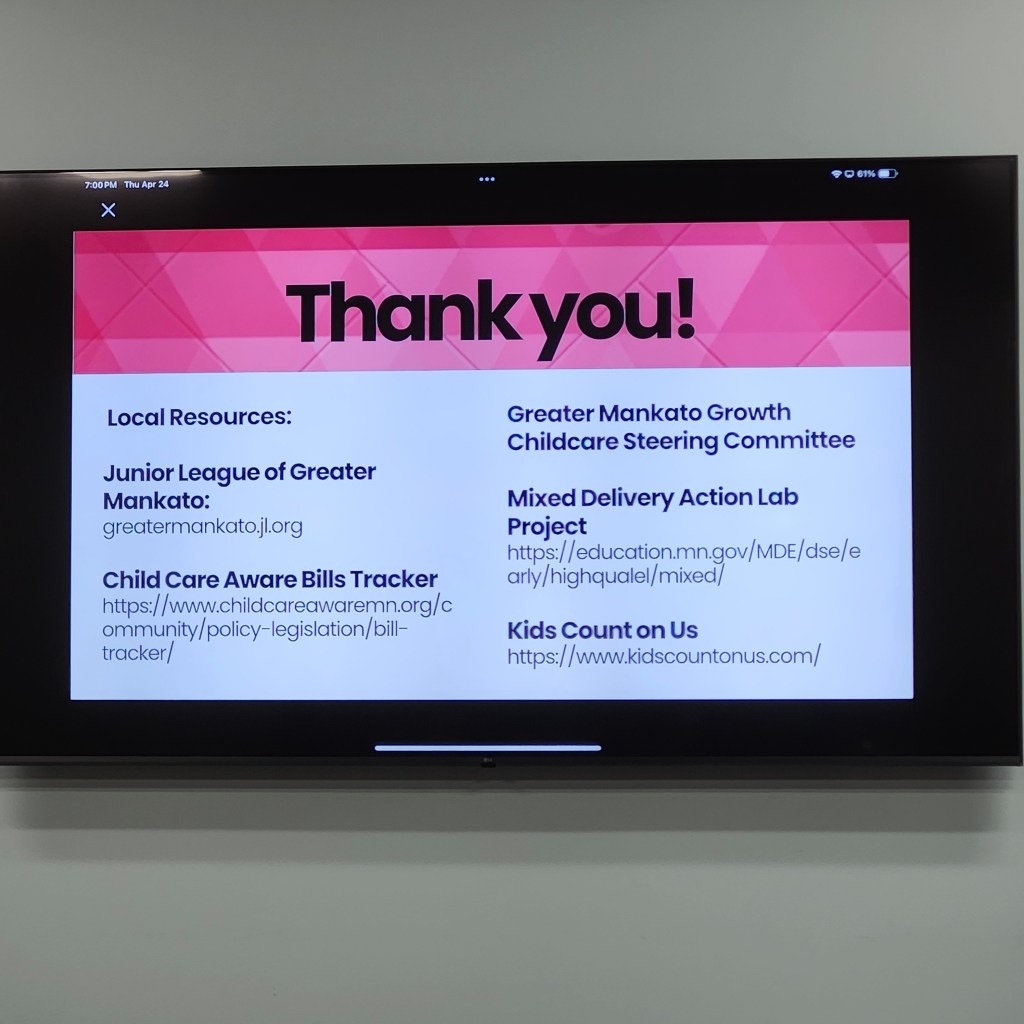
For those interested in learning more or getting involved, visit the Junior League of Greater Mankato’s website or contact your county’s childcare licensing office. Together, we can work toward a stronger childcare system that supports our children, families, and providers.
Thanks,
Elizabeth Hanke
 Elizabeth Hanke for Mankato School Board
Leave a comment