Author: Elizabeth Hanke
08/17/2024
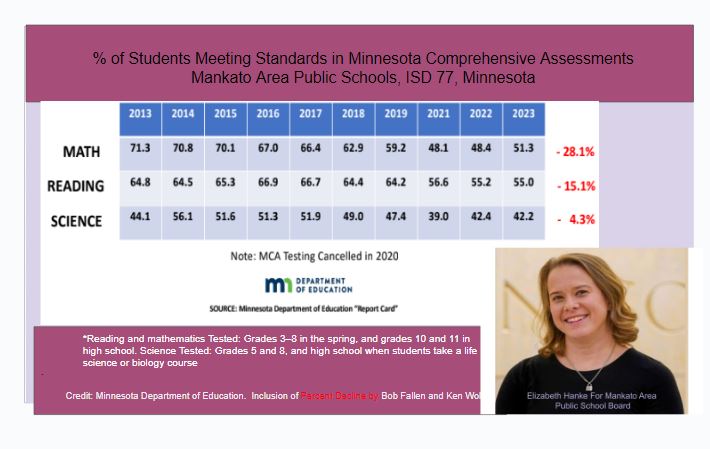
In the past decade, Minnesota’s academic performance has notably declined, raising alarm for educators, parents, and policymakers alike. According to the Minnesota Comprehensive Assessment (MCA) test scores, student proficiency has steadily decreased. In 2013, 71.3% of students met standards in Math, 64.8% in Reading, and 44.1% in Science. Fast forward to 2023, and those numbers have plummeted to 51.2% in Math, 55% in Reading, and 42.2% in Science. While the COVID-19 pandemic exacerbated educational challenges, this downward trend began long before the pandemic.
Factors Behind the Decline
Several factors contribute to this decline. Classroom environments have become more challenging for both students and teachers due to behavioral issues, increased class sizes, and reduced one-on-one attention. The socio-economic gap continues to widen, leaving disadvantaged students further behind their peers. The increase in phone use, a significant distraction, prompted the district to implement a phone policy. However, it’s crucial for our administrators to ensure the policy is strictly enforced.
Strategies for Reversing the Decline
- Strengthening Early Intervention Programs: Early childhood education programs that focus on foundational literacy and numeracy skills can significantly impact. Supporting students who fall behind early on is essential to keeping them on track in later years.
- Supporting Teachers with Effective Resources: Ensuring teachers access updated, research-based curricula can enhance classroom instruction. Moreover, reducing administrative burdens allows teachers to focus more on teaching.
- Fostering Family and Community Engagement: Schools must work closely with families to support learning at home. Community programs offering tutoring, mentoring, and enrichment activities can also bridge the gap for struggling students.
- Improving Classroom Environments: Reducing class sizes, increasing the presence of support staff, and ensuring teachers have the authority to maintain discipline can create a more conducive learning environment. Respect in the classroom is a key factor in maintaining a productive educational atmosphere.
- Reevaluating Curriculum Content: The Curriculum must balance skill development and fostering critical thinking. Introducing real-world applications in math and science while integrating engaging materials can reignite student interest and improve performance.
Moving Forward
Reversing this trend requires a multifaceted approach considering academic and non-academic factors. We can steer education back on course by addressing classroom dynamics, providing targeted support to students, and involving the broader community. Collaboration between educators, parents, and community leaders is vital for creating an academic environment where every student can succeed. With proactive solutions and a commitment to continuous improvement, there is hope to restore and surpass previous student achievement levels.
Let me know what you think.
bethhanke1@yahoo.com
 Elizabeth Hanke for Mankato School Board
Leave a comment